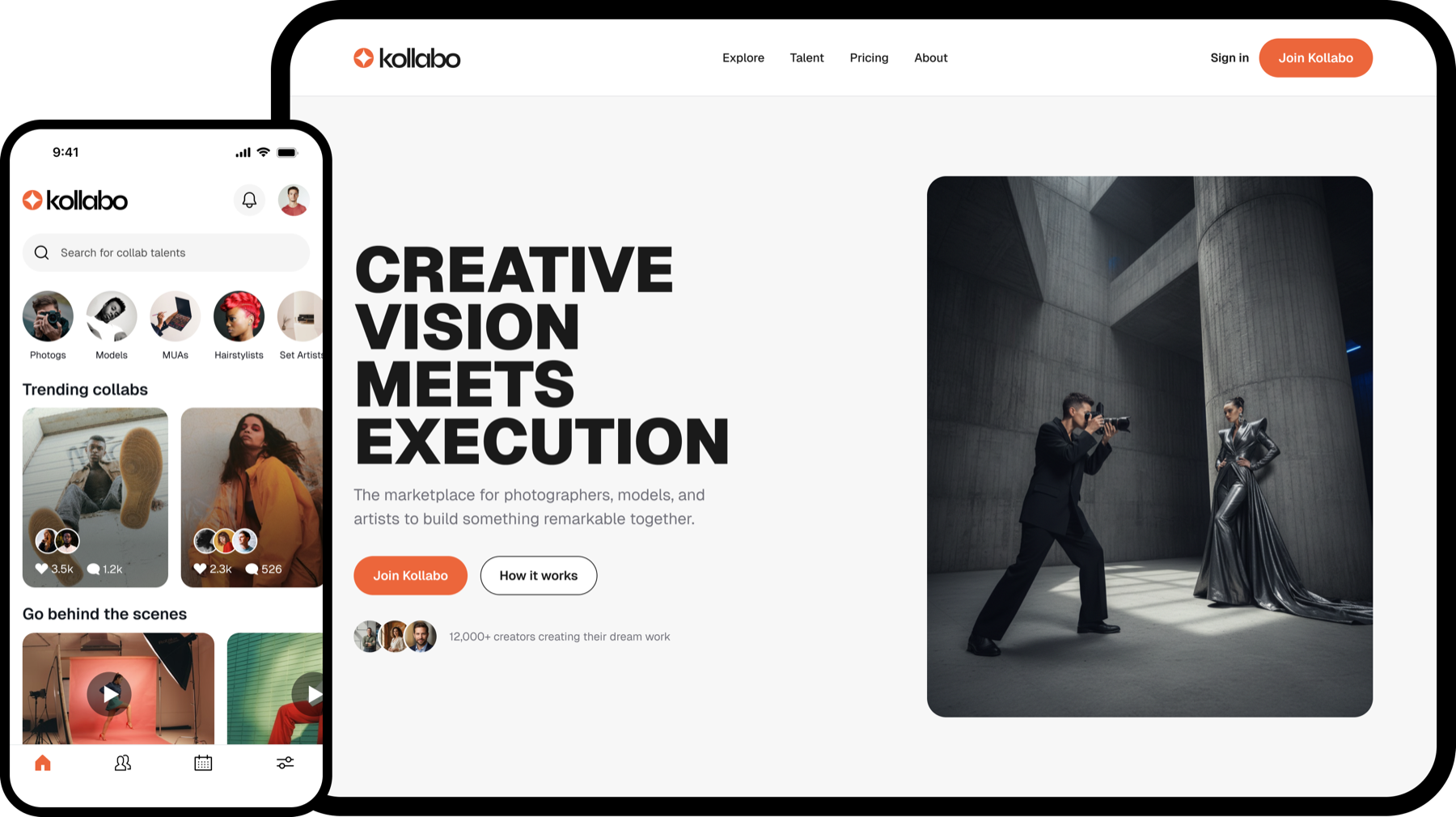
Kollabo
A marketplace for creative collaboration
Researched, prototyped, and tested a solution to help creatives find each other in their area.
Year
2023
Role
User research · Product design · Branding
Team
Solo
Platform
Mobile
Background
Confronting a personal problem
During one of the toughest times in my life, I picked up photography as a way to find some control and purpose again. I started out shooting plants, animals, and outdoor objects, then moved to friends and family. Pretty soon I realised I loved portraiture, and had a knack for it.
Eventually, I wanted to take it further into more professional, fulfilling work. That meant teaming up with other talented creatives. But there was a slight snag: I had spent almost everything I had on a camera and had next to nothing left. Definitely not enough to hire top models and makeup artists.
Then I stumbled into the world of collaborations. Turns out it's a pretty standard thing in the creative industry: a way to prove yourself, develop and showcase your skills, build your network, and eventually attract paying gigs that respect the work. And the best part? It's all for free.
Sounds great, right? Well, there was one little problem…
The problem
Finding collaborators is super hard work
There are quite a few platforms for sharing creative work, but Instagram has become the default for most of us, including me. The platform is packed with millions of creatives, businesses, and brands.
Finding people to actually collaborate with feels like a game of luck and hustle. You sift through endless feeds with limited search terms and hashtags, comb the results, then finally DM someone hoping they're down. Spoiler: most times, they're not, so you keep doing this over and over to up your chances.
The other route is posting an open call and hoping people come to you. But as a newcomer your reach is limited unless you pay to boost. And again, you hit the same problem of getting anyone interested before you've done much work.
Yes, being passionate means working hard. But why should things be hard if they can be easy?
So my innovation brain revved: what if there was a product that served this particular need and niche? As a designer I decided I would create one.
Research & insights
What could I learn from others facing the same challenge?
Curious whether other creatives felt this the same way I did, and about where their experience diverged from mine, I decided to go beyond my own perspective as a photographer and talk to people.
I interviewed 8 creatives across four disciplines: photographers, models, makeup artists, and set decorators. I wanted to understand how they currently find collaborators, what makes them say yes or no, and where collaborations tend to break down. I also wanted to validate the solution: is it something creatives would even want to use? If so, what features would be most important to them?
Some key questions I asked:
How do you currently find and connect with other creatives for collaborations?
What platforms or methods do you use most frequently?
What challenges do you face when trying to find collaborators?
What kind of information do you like to see on a potential collaborator's profile?
How do you prefer to communicate with collaborators?
What features would you find most valuable in a collaboration app?
The following themes emerged from synthesising the findings from the interviews.
Current collaboration challenges
- Discovery challenges. Creatives face real difficulty finding potential collaborators. Existing platforms force extensive searching through hashtags and profiles, which is time-consuming and often unproductive.
- Unreliable matches. Collaborations frequently fall through due to mismatched expectations, skill levels, or availability. There's no reliable matching layer to surface compatible people.
- Communication barriers. Managing conversations and project details across email, social, and messaging apps is fragmented and inefficient.
Desired features
- Profile details. Comprehensive profiles with portfolios, skills, availability, and location: enough to actually make an informed decision.
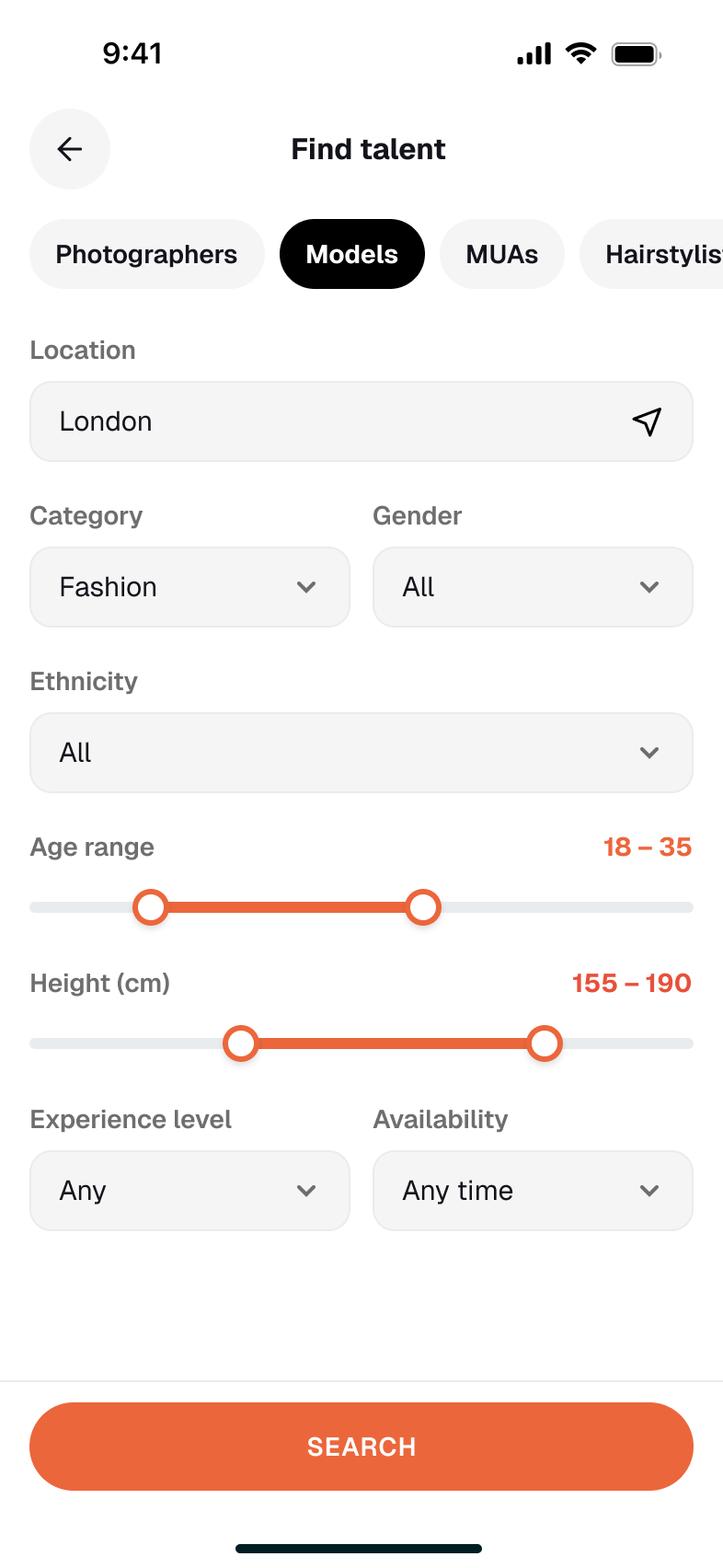
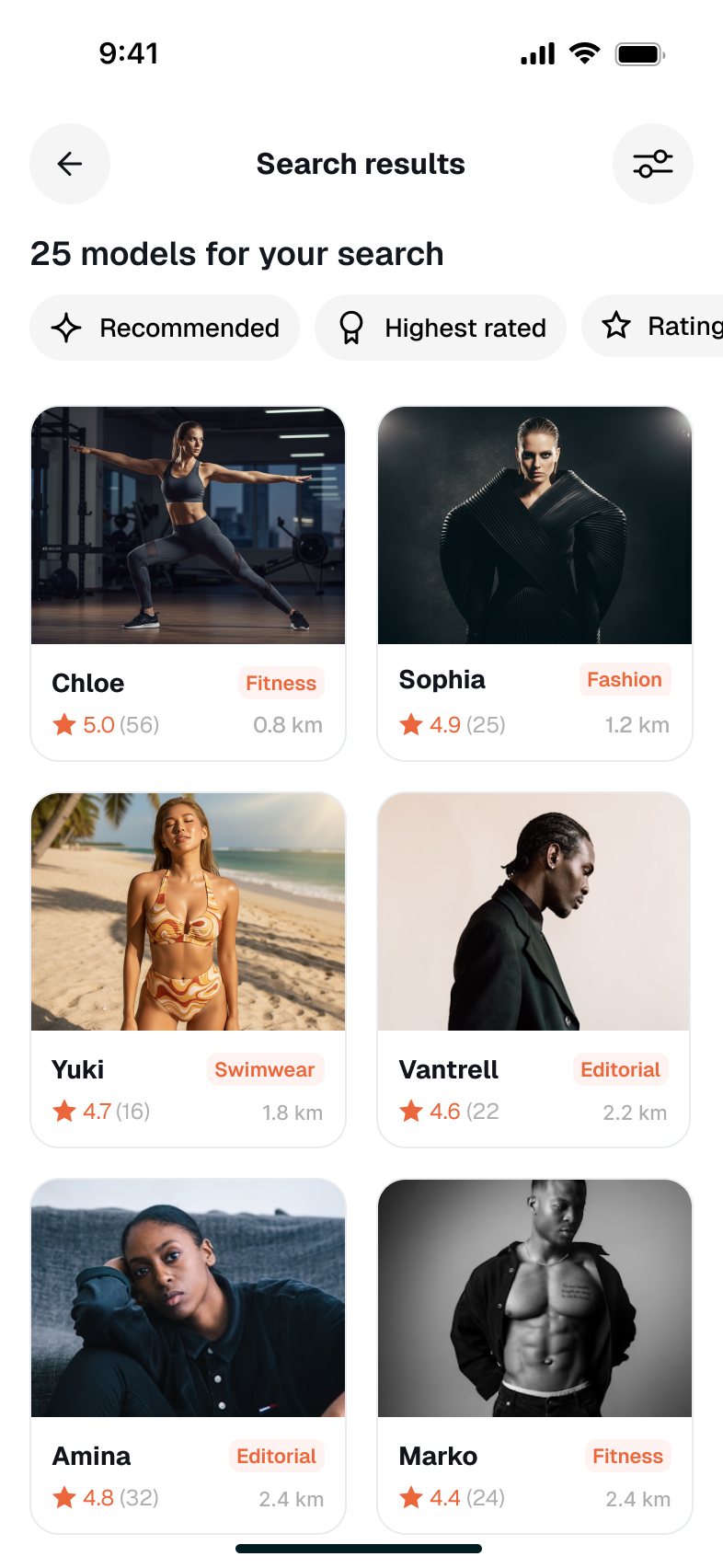
- Search and matching. Search and recommendations that consider talent type, skill level, style, and location so the right people surface quickly.
- Showcase work. The ability to surface and view work inside the app, not as an external link, to assess compatibility and quality.
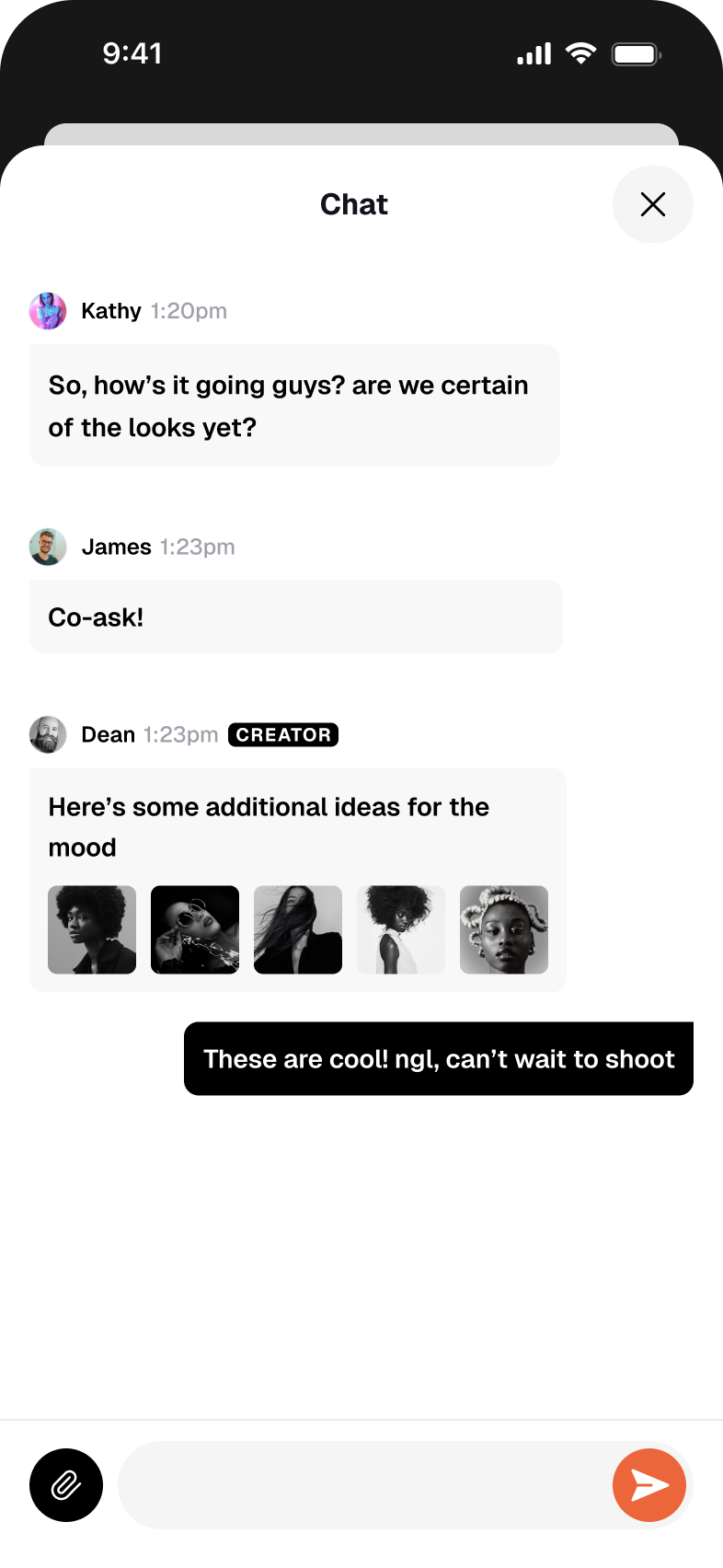
- In-app communication tools. Integrated messaging and lightweight project management to keep coordination in one place.
- Notifications and reminders. Timely nudges for deadlines and messages so things don't fall through the cracks.
Community & networking
- Local focus. Location matters: users overwhelmingly preferred collaborating with creatives nearby, where logistics are easier and meet-ups are realistic.
Feedback & reviews
- Trust and credibility. Reviews and ratings of past collaborators were a recurring ask, vital for building trust before anyone says yes.
From the synthesis I built two personas to anchor the design work, one on each side of the marketplace.
TA

The Seeker
Tope Adigun
Lagos, Nigeria · 3 years self-taught photographer
Picked up the camera as a creative outlet and is now trying to build a body of editorial work that turns into paid commissions. Budget is tight, so collaborations are the only realistic way to level up. Cares more about a collaborator's style than their follower count.
Frustrations
- Loses hours trawling hashtags, because a job title tells him nothing about whether someone's look and style suit the shoot he has in mind.
- Cold DMs go unanswered, and he never learns whether the ask was wrong or simply never seen.
- Finds the right person, then discovers they shoot three cities away.
Goals & outcomes
- Find collaborators whose visual style matches the work he wants to make, not just their discipline.
- Run a shoot from one place, with the brief, the timings and the conversation in the same thread.
- Build an editorial portfolio strong enough to attract paid bookings.
AO

The Talent
Amara Okeke
Lagos, Nigeria · 2 years modelling, freelance MUA
Splits her time between modelling and freelance makeup. Relies on collaborations to grow both portfolios at once, but she's selective. Her time is her main currency, and a bad shoot is a wasted day she could have spent on paid work.
Frustrations
- Vague asks. 'Hey, wanna collab?' tells her nothing about the shoot, so she ignores most of them.
- Days lost to photographers who overpromised. The shots came back unusable, when they came back at all.
- Concept, call time and location scattered across DMs, email and WhatsApp, so details get lost between agreeing and arriving.
Goals & outcomes
- Say yes only to the shoots that are worth a day of her time.
- Know the concept, the look and the call time before she commits to anything.
- Build a reputation that brings requests to her instead of chasing them.
Design
Designing the core flows
With the personas and insights in hand, I designed the product around four flows, each one a direct answer to a problem the research surfaced. I'll walk through them in the order a new user would meet them.
Find a creative
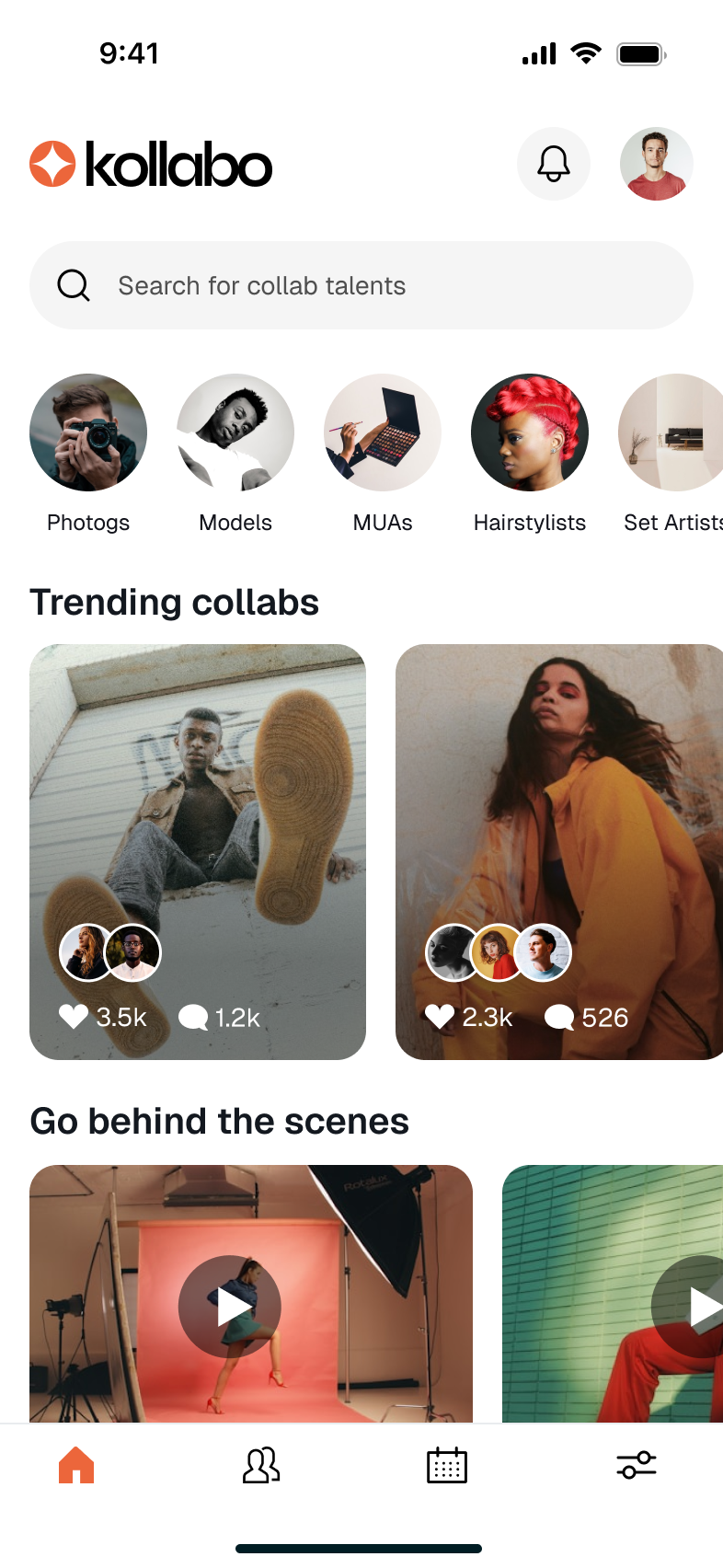
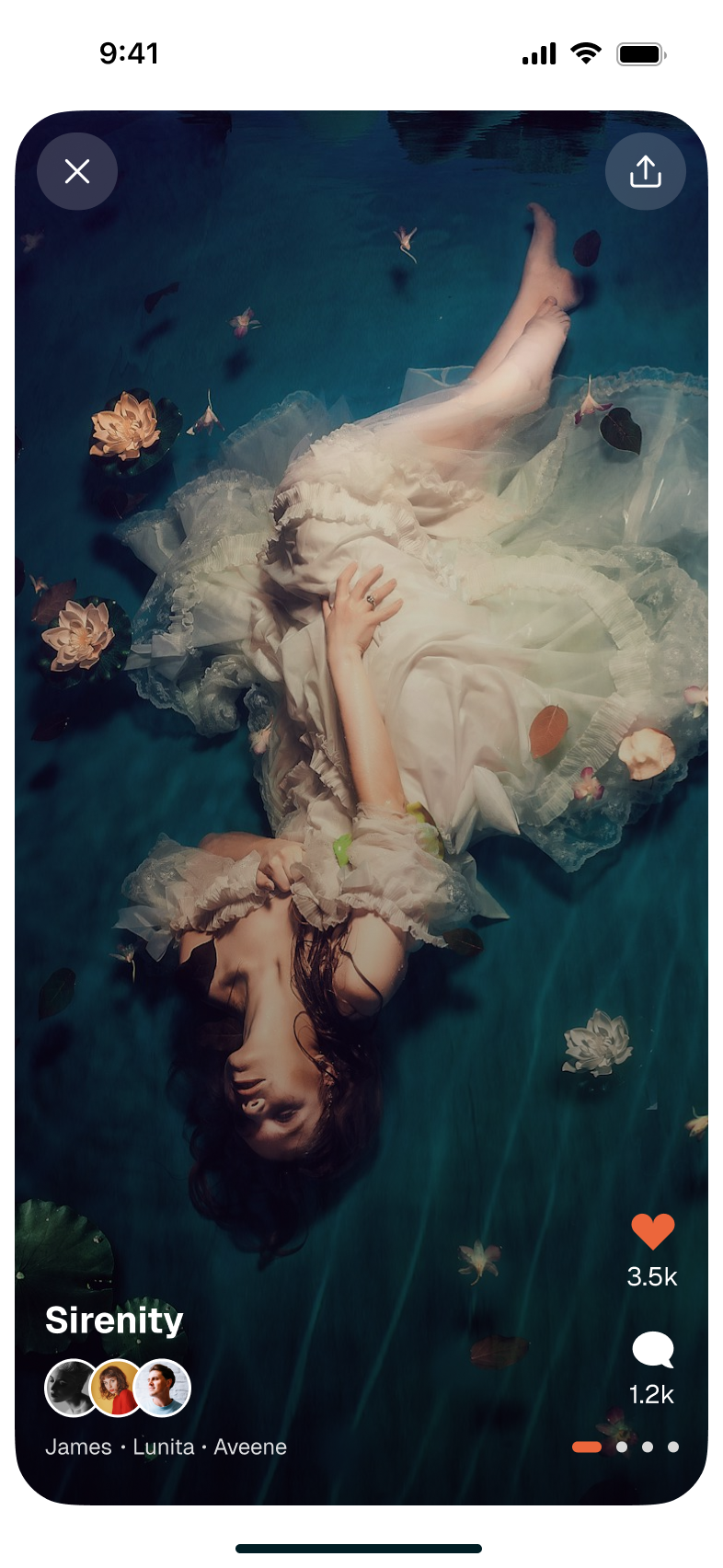
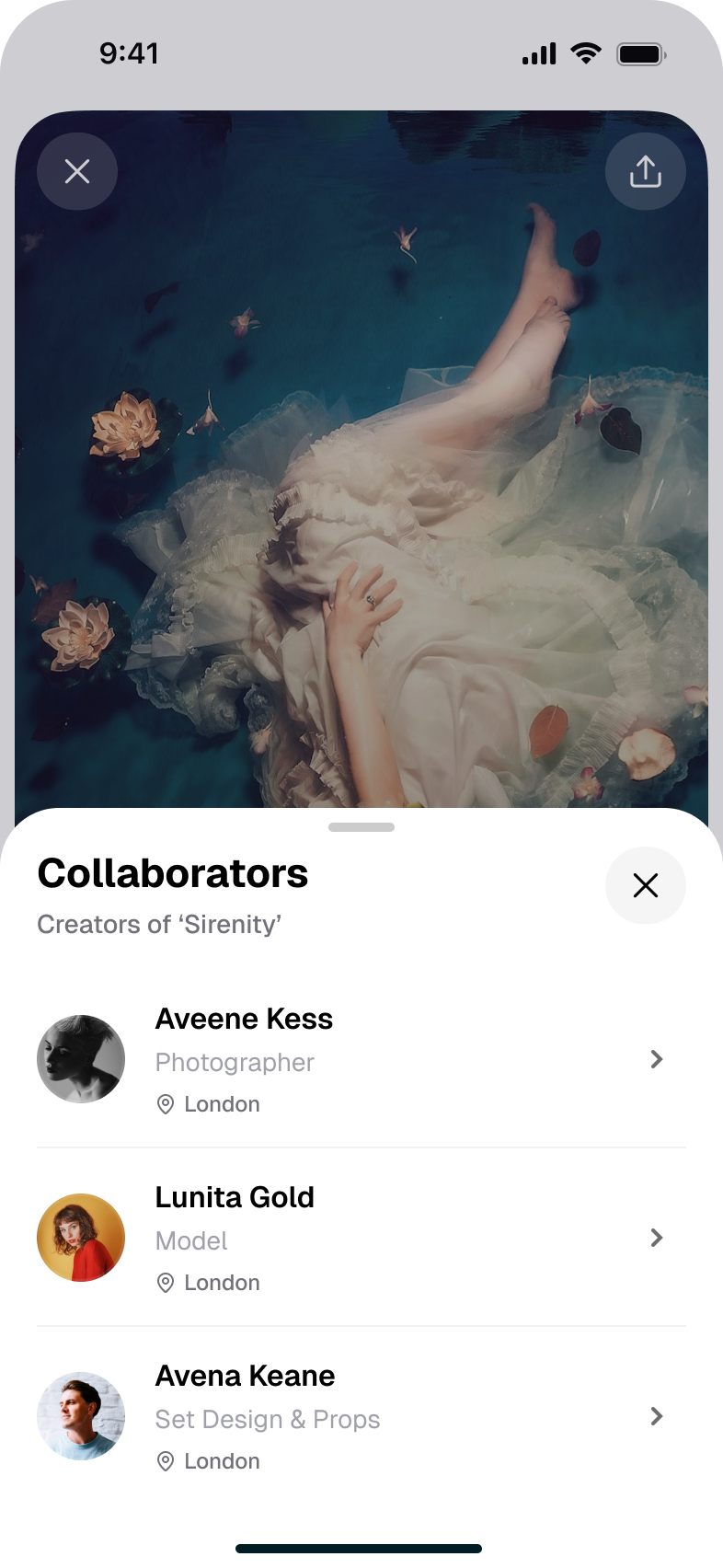
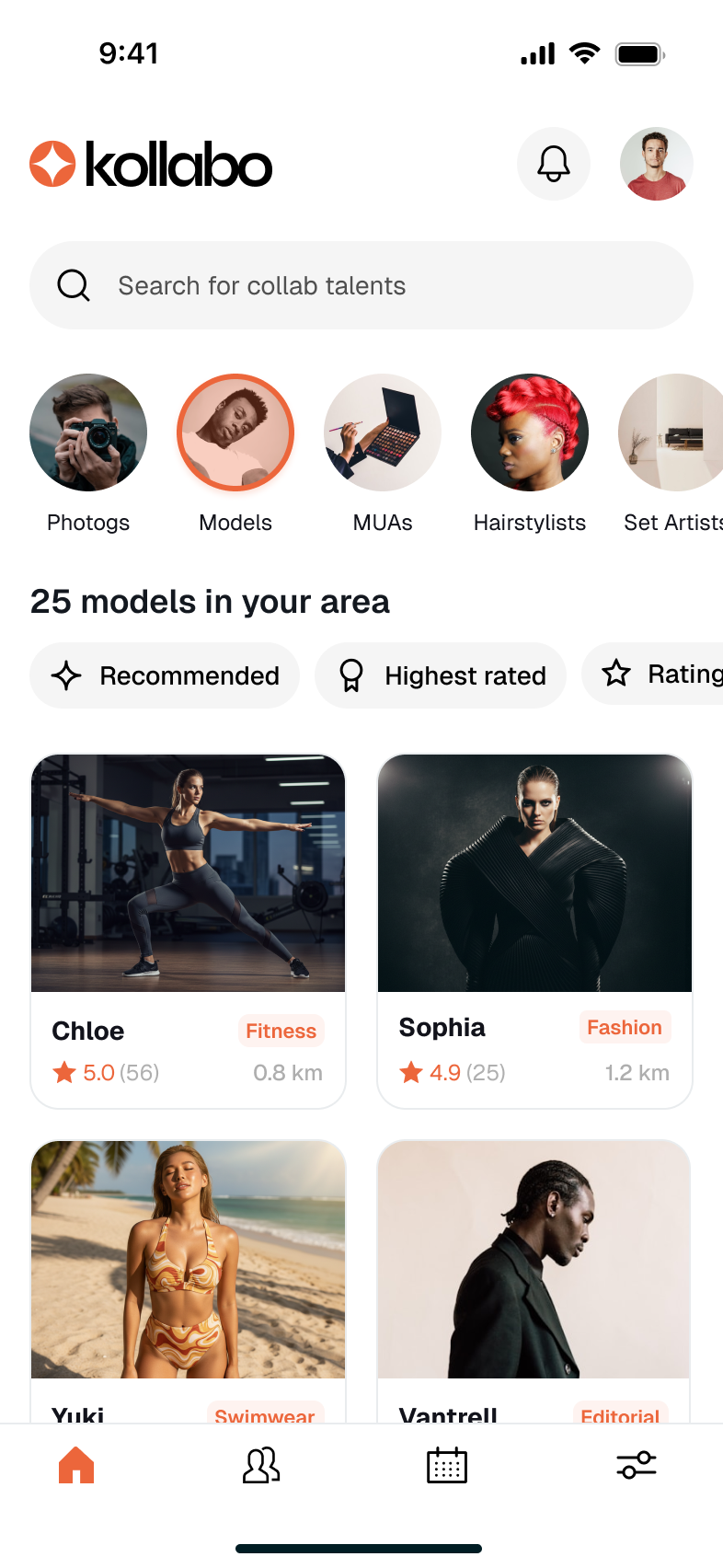
Discovery is the heart of the product. Kollabo opens on a home page to discover content and search for talent. It features trending collaborations, behind-the-scenes video, and the disciplines as tabs to filter through. Browsing through content leads to its makers.
Vet before you commit
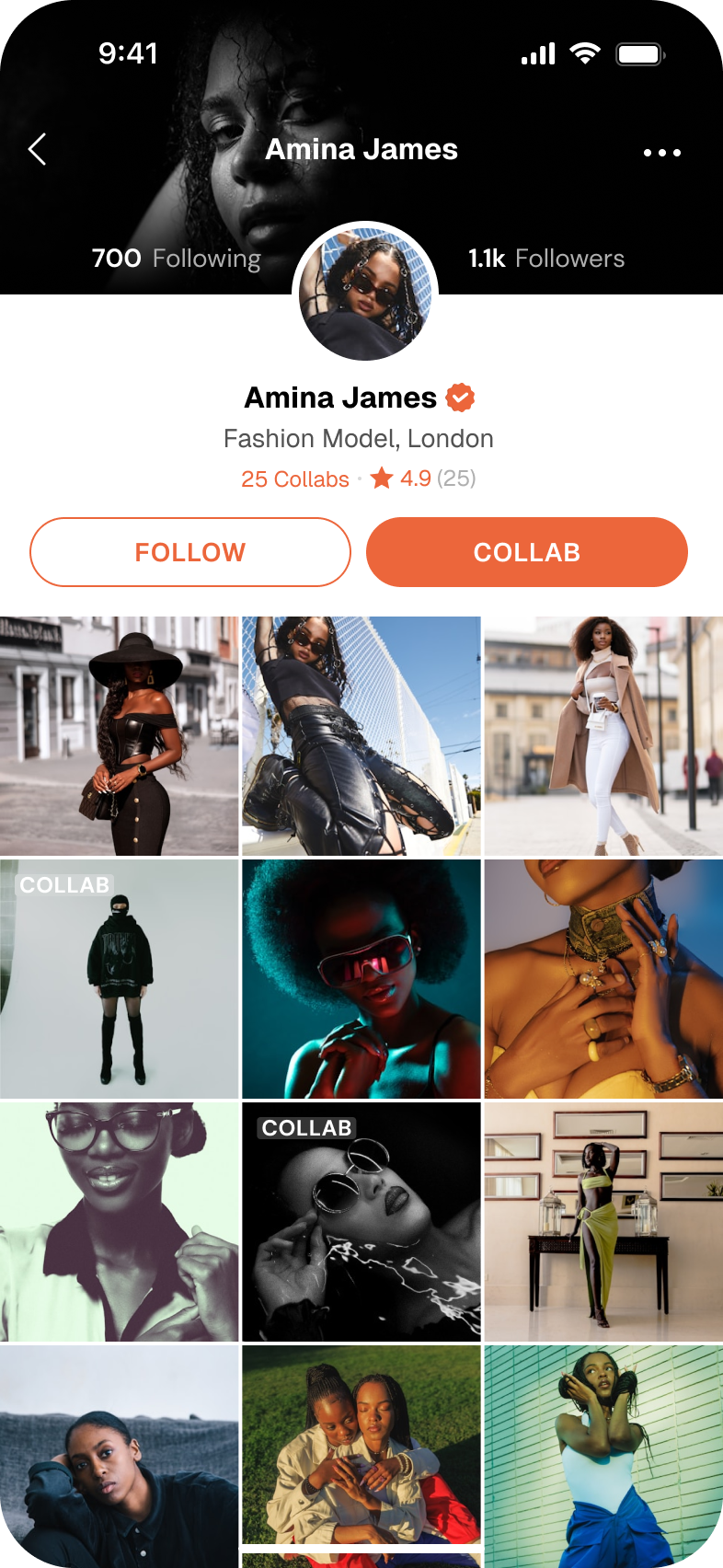
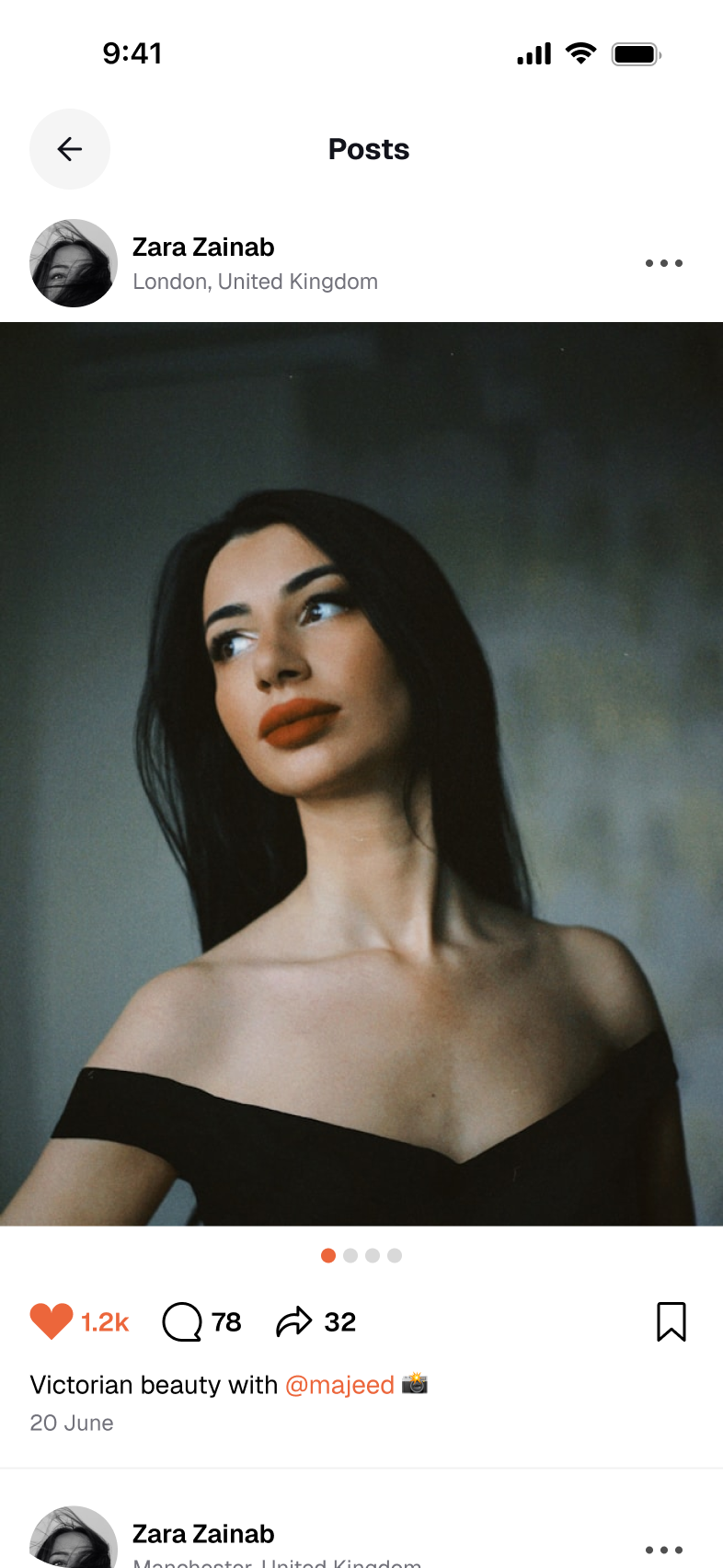
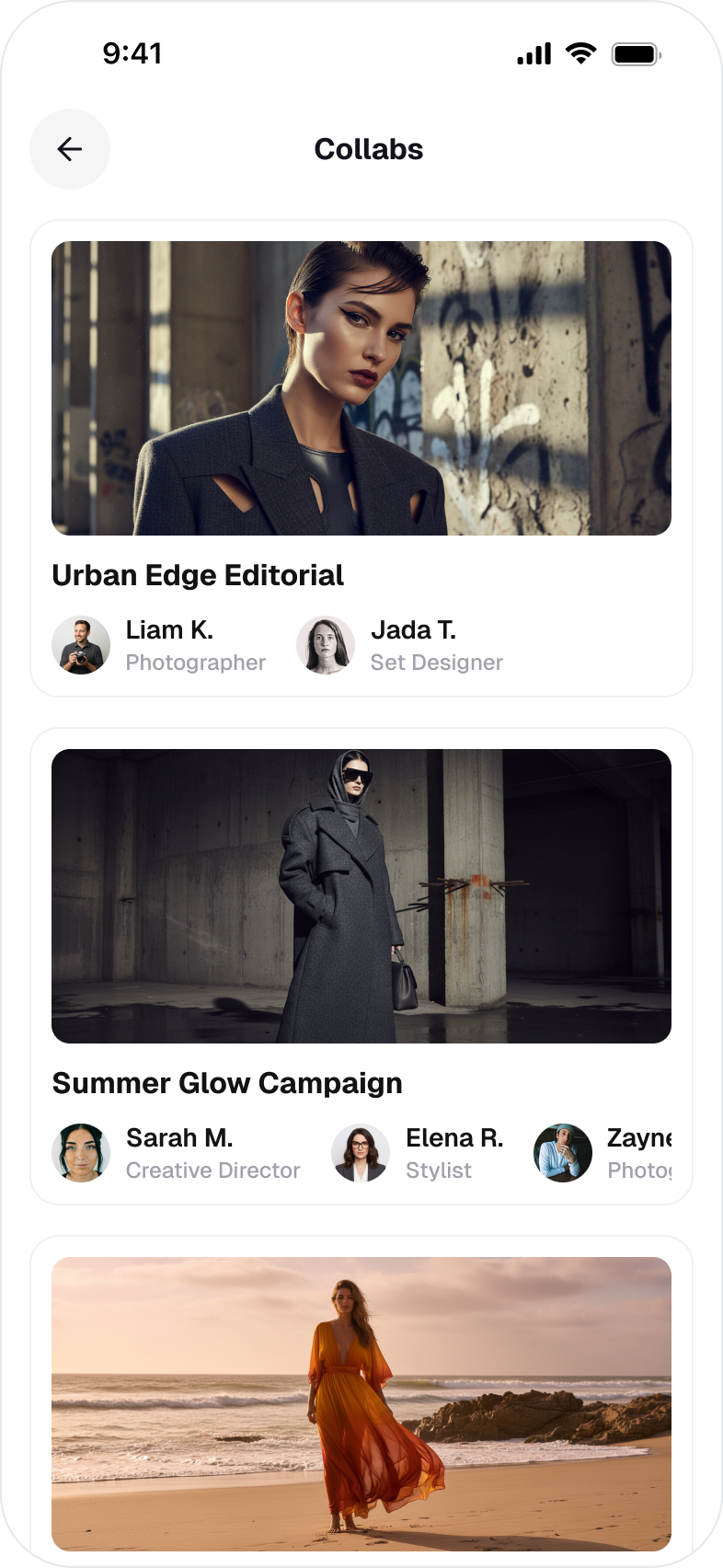
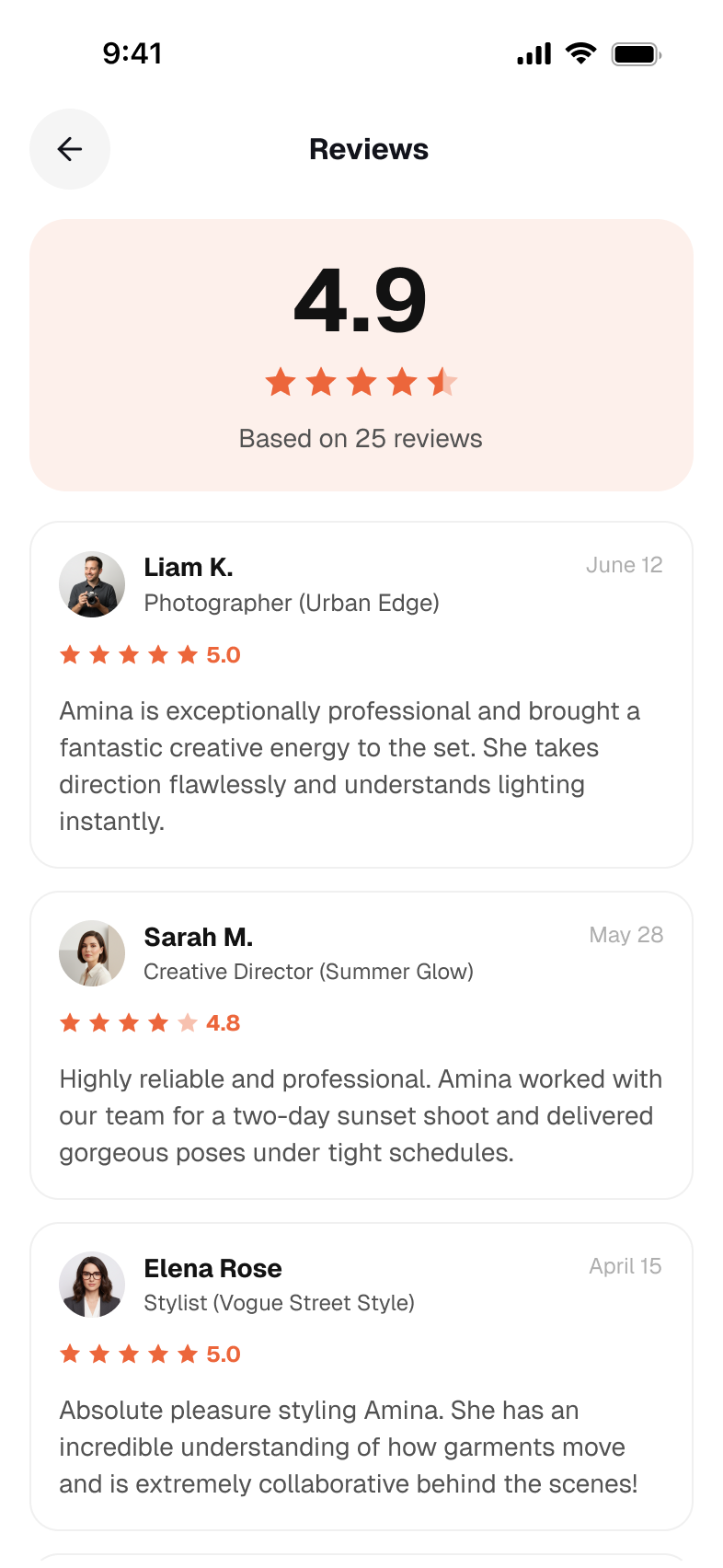
A talent seeker can browse through the profiles they discover and search for, and vet before connecting or inviting for collaboration. I designed a grid to showcase the talent's work, with collaborations labelled with a badge. The seeker can also tap through to see reviews and collaborations.
Send the collab request
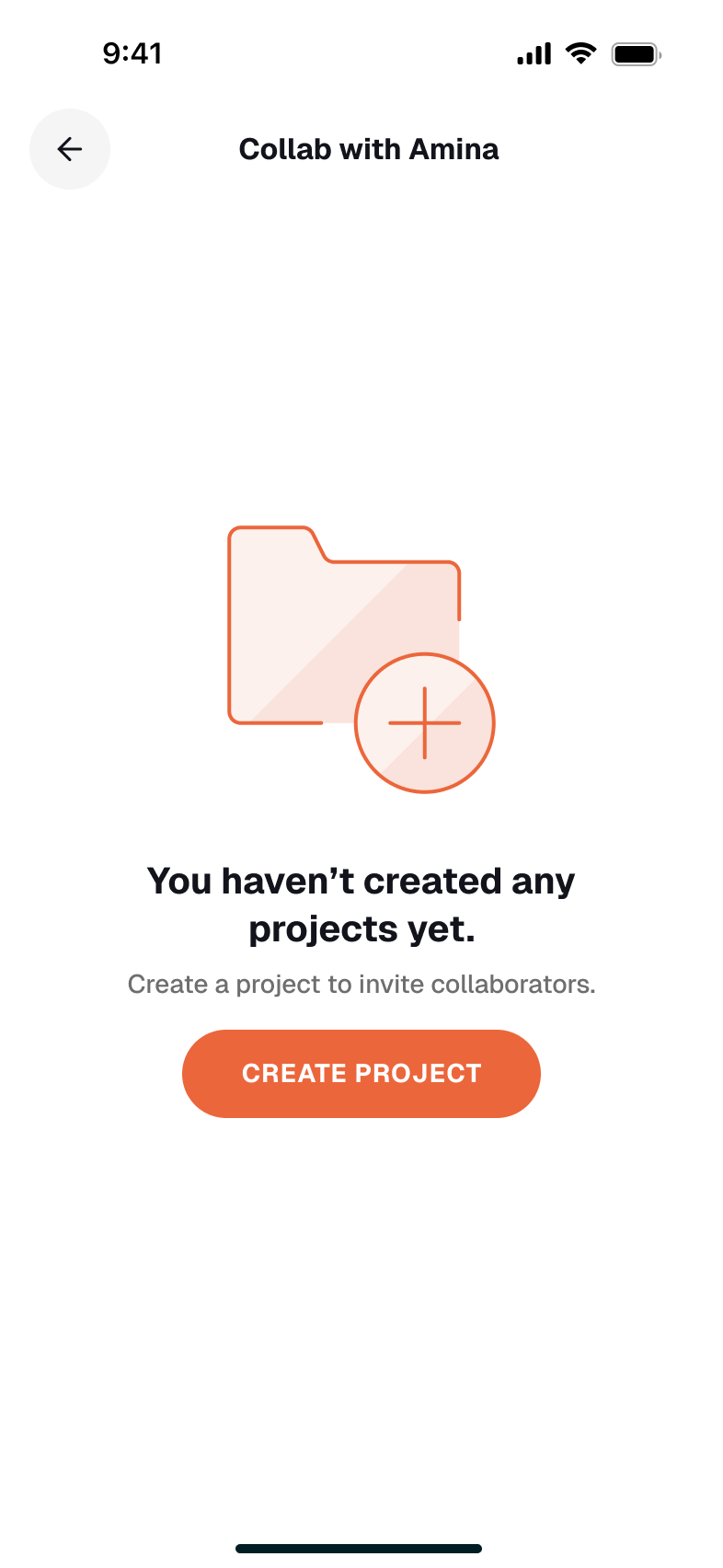
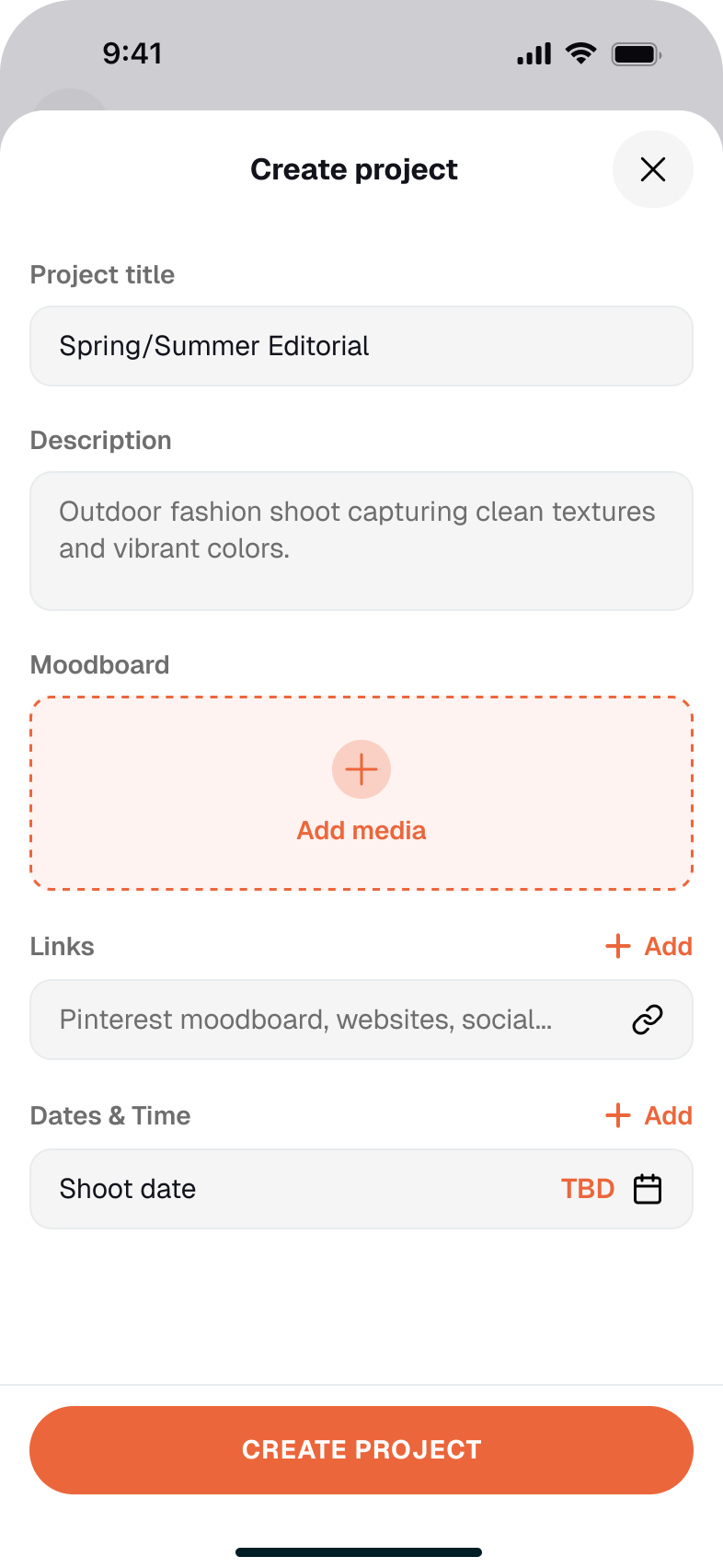
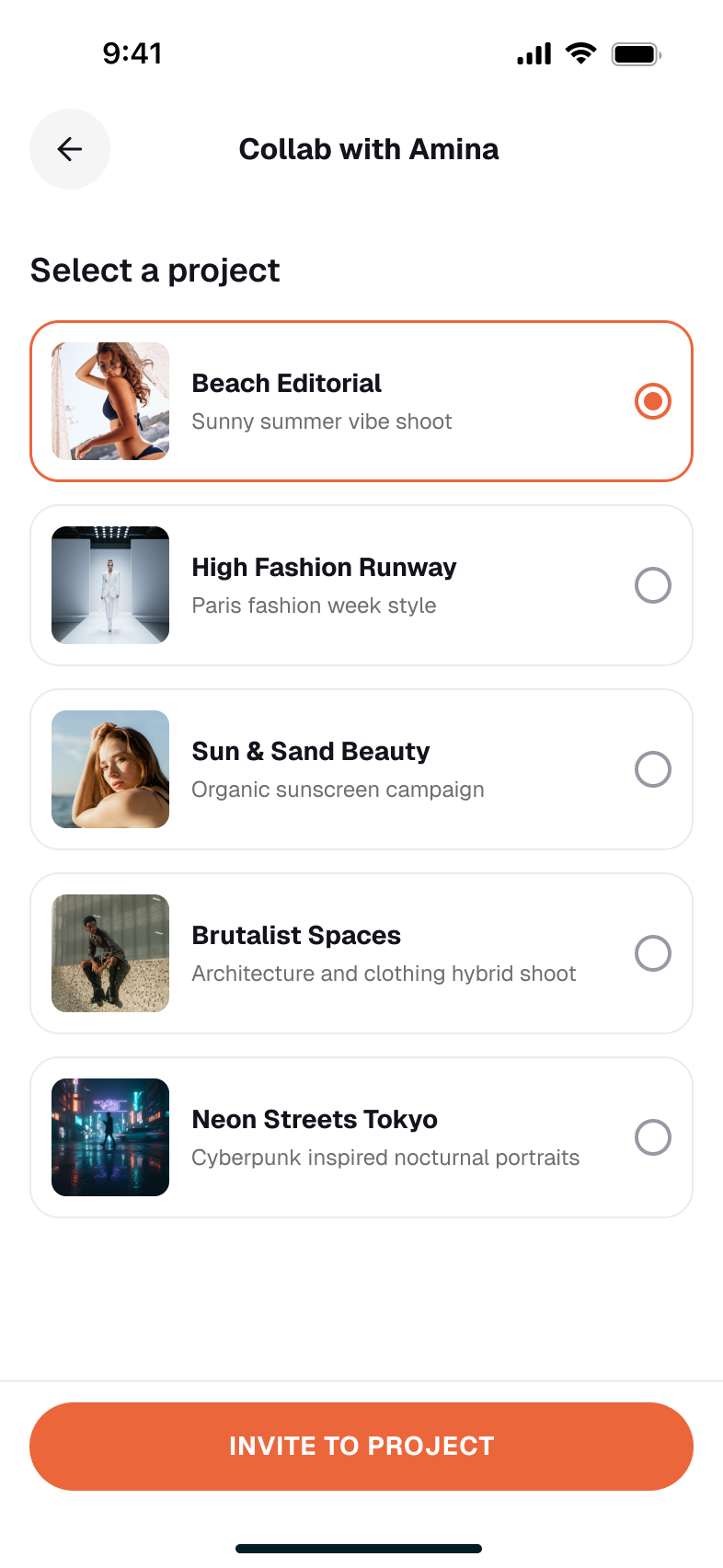
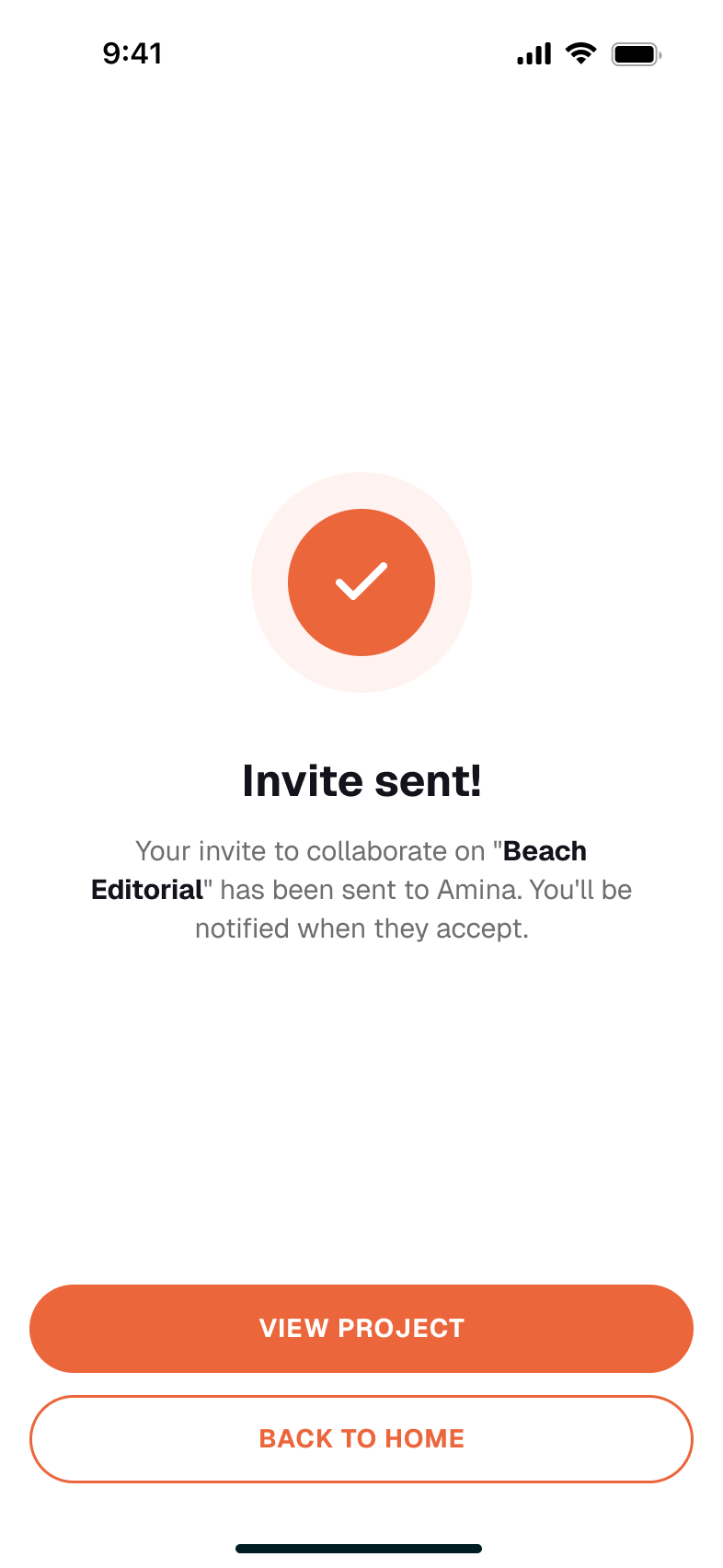
Designed the collaboration request flow to address Amara's frustrations. On Kollabo, you don't just message someone, you invite them to a project.
Manage the shoot
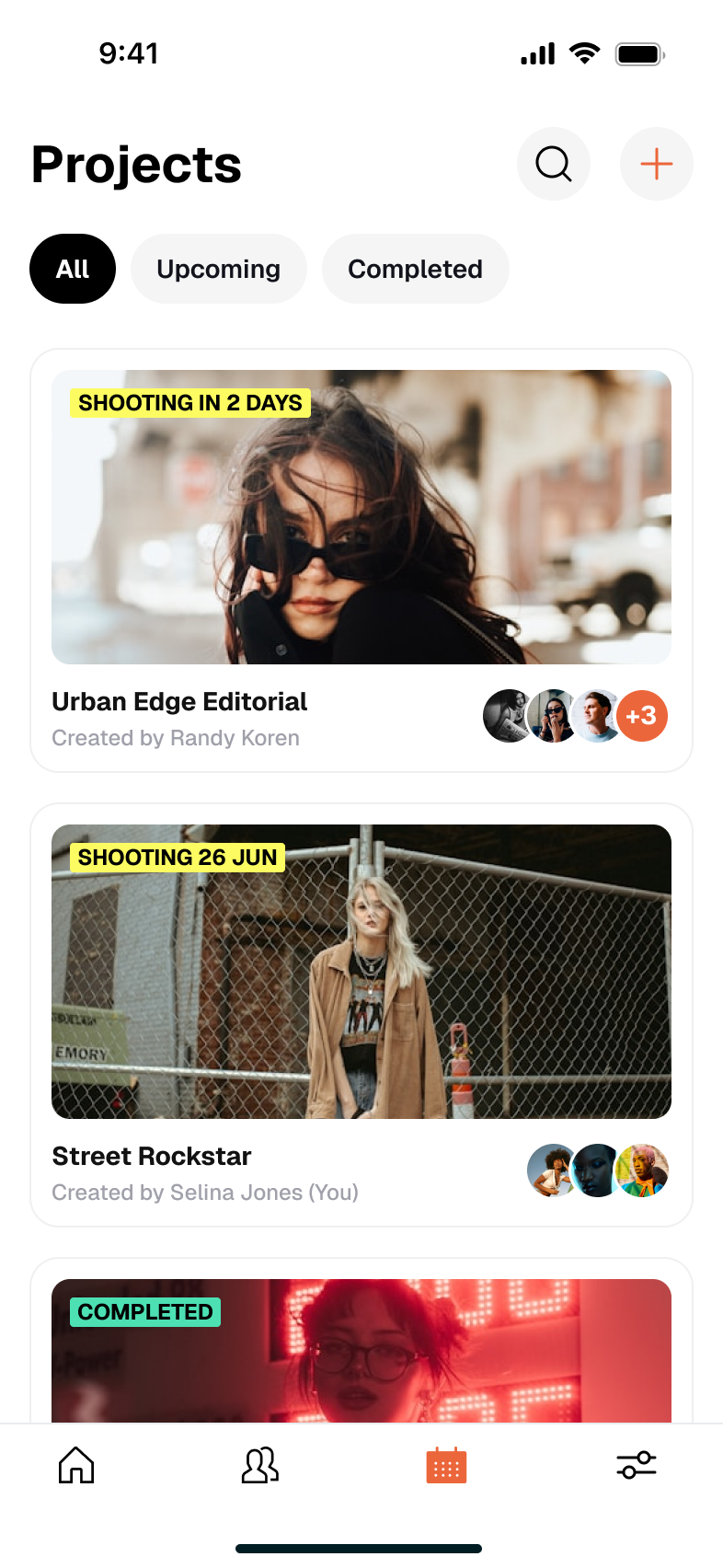
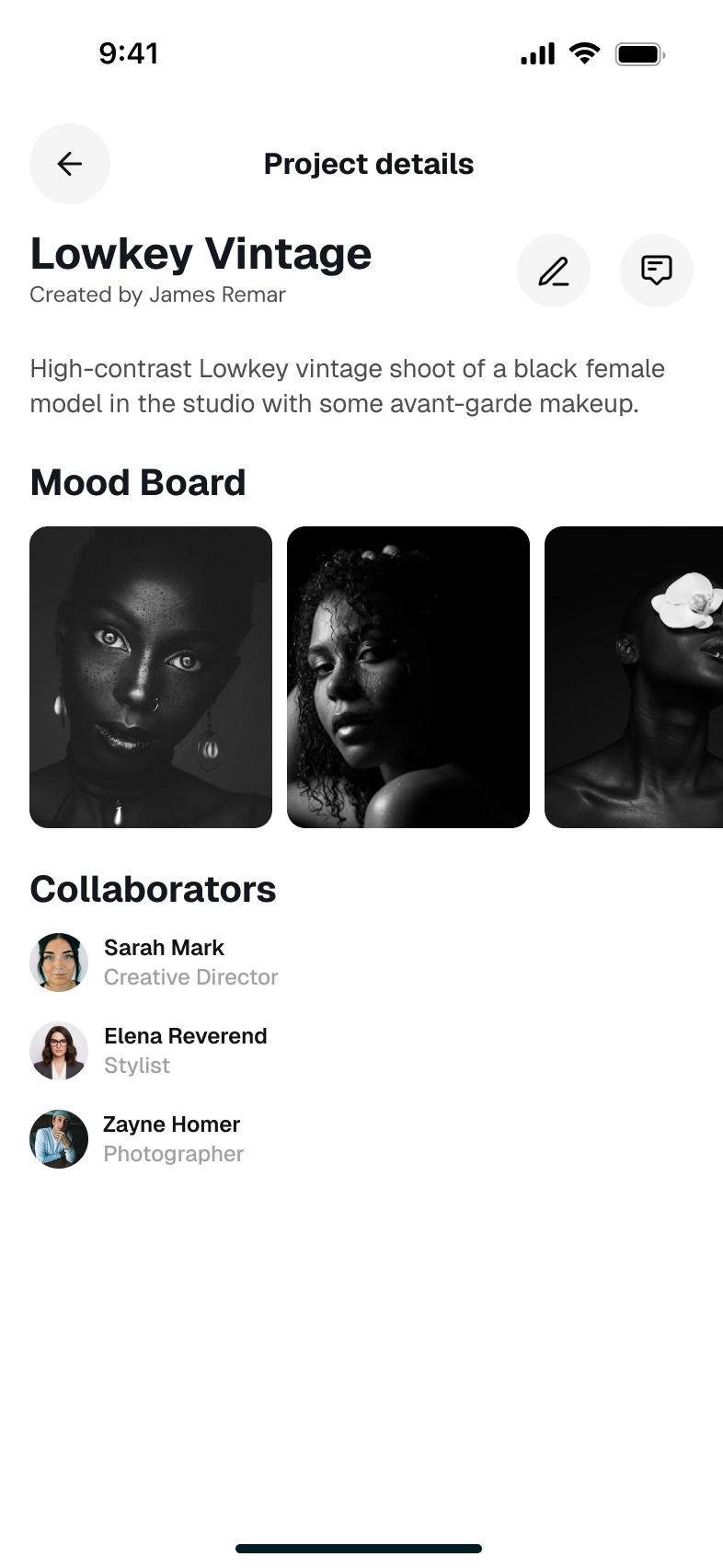
A project is the place the shoot lives. The brief, moodboard, team and conversation all in one place. Once a talent accepts a collaboration request they gain full access to the project.
Testing & iteration
I ran usability tests throughout and iterated based on real user feedback, balancing experimentation with clarity in the final designs as shown.
What next
In late 2023 I moved into a senior product design role, and the bandwidth Kollabo needed went with it. Therefore I had to pause the project.
Fast forward to 2026, I am now looking to harness the power of AI to make this a real product, especially leveraging my learnings from building and launching Pidginary.
The need for Kollabo is still very real as long as the creative industry exists. Gratefully, we now have the power to do what was previously impossible.